Poetic Beat
An interactive performance instrument that transforms rhythm, melody, and gesture into visual poetry
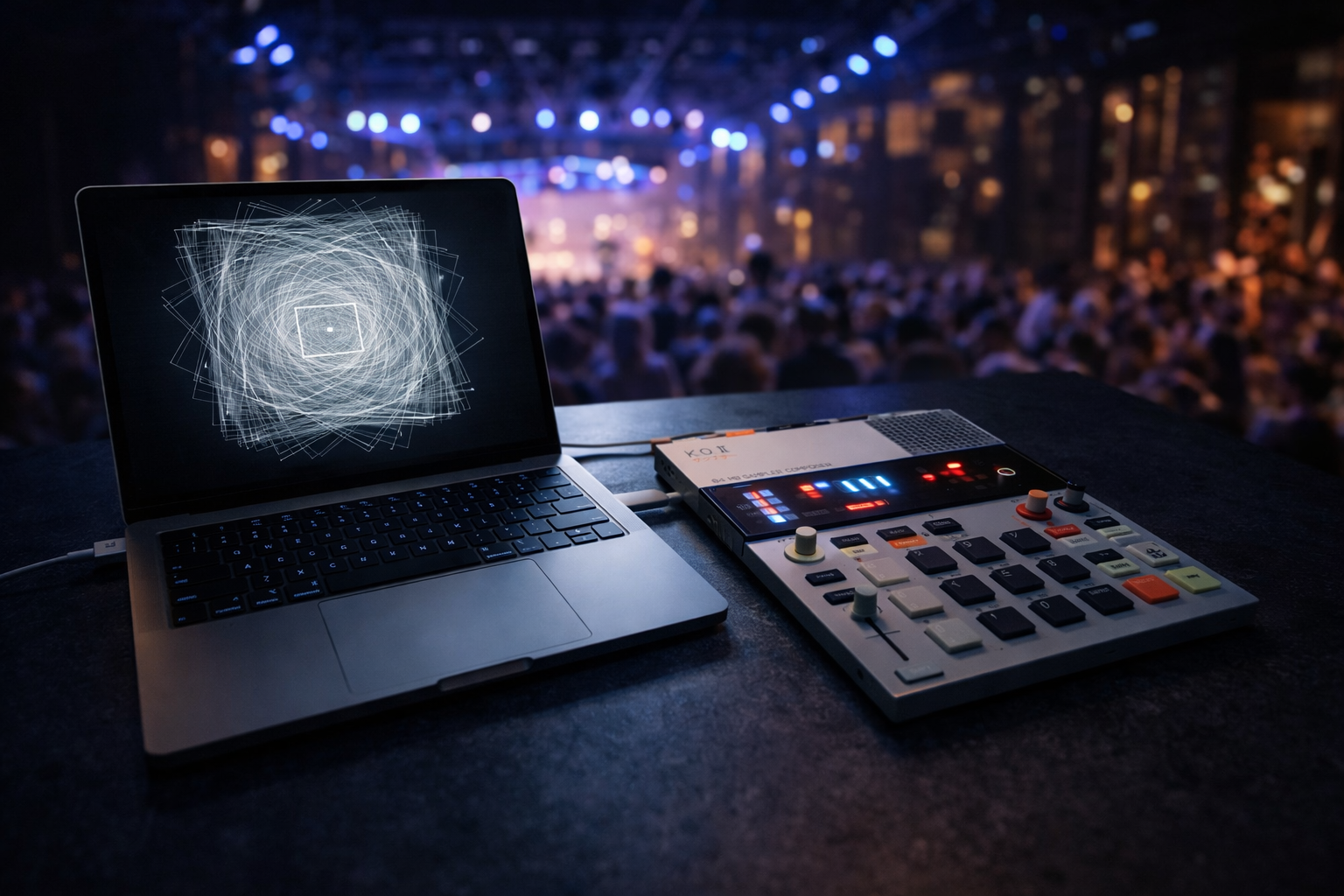
Poetic Beat is a performance instrument I built to explore how musical gesture can act as a form of language.
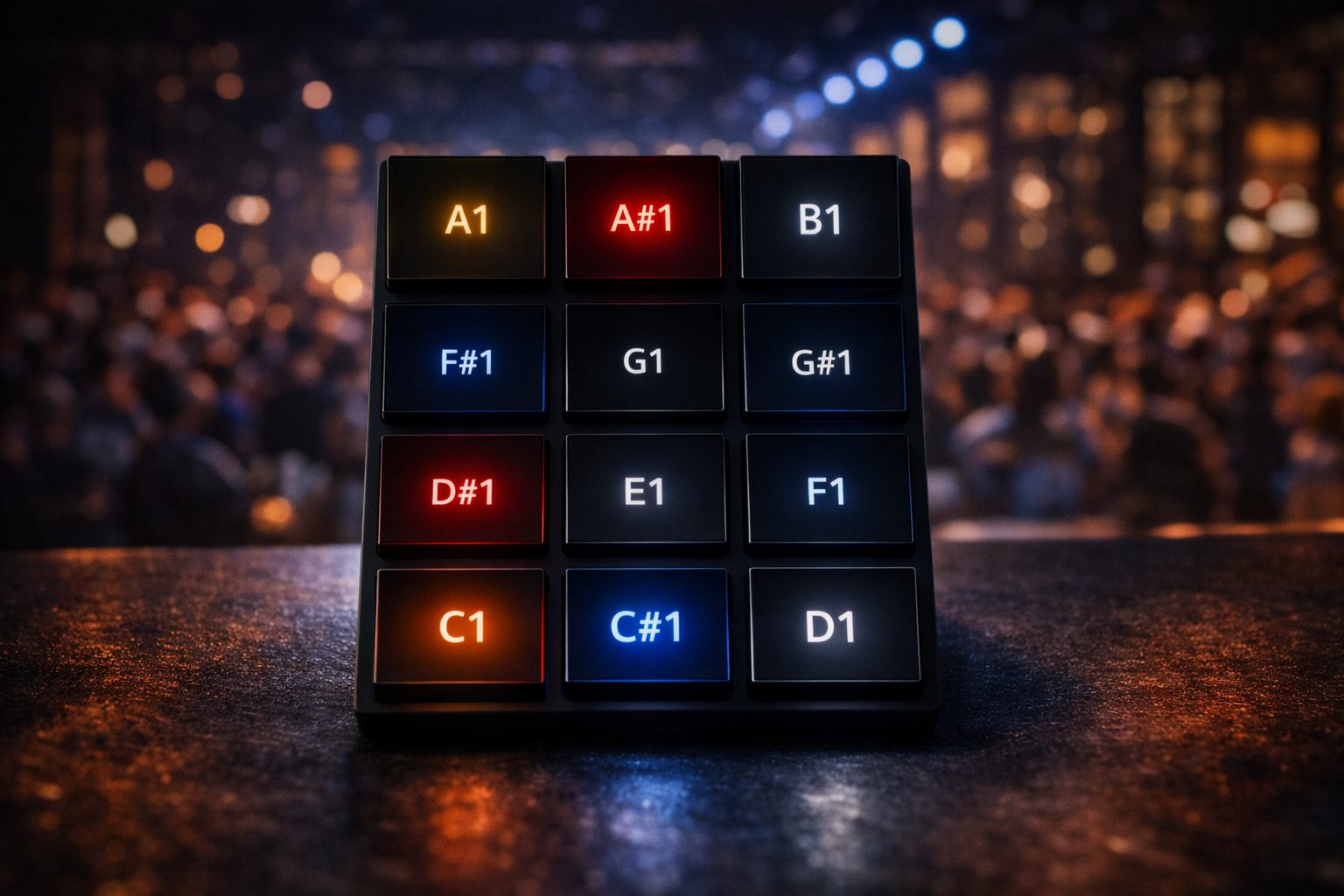
Each pad I play triggers more than sound—it activates a generative visual pattern and a line of poetic text. As I perform, rhythm becomes structure, melody becomes motion, and silence becomes stillness. The visuals respond in real time, freezing completely when I stop and intensifying as my playing grows more expressive.
The piece begins in black and white, drawing from op art and traditional pen-and-ink practices. As the performance evolves, color emerges—mapped to specific gestures and emotional intensity—allowing a narrative to unfold through repetition, distortion, and contrast. Words appear, shift, or disappear depending on how the pattern is shaped, making the act of performance feel closer to writing than triggering media.
The visual language emerged through an iterative process—initially sketched in Processing as exploratory studies, then reworked and refined into a real-time, performable system. This allowed the patterns to evolve from static compositions into responsive forms shaped directly by musical gesture.
This work sits between instrument and canvas. It treats performance as a way of composing with movement, timing, and attention—where sound, visuals, and text evolve together as a single expressive system.
Research Question
This project asks how live performance can function as a storytelling medium, where sound, gesture, visuals, and language emerge together in real time. If a performer is actively shaping a visual pattern, how should words respond—should they appear, transform, fragment, or remain silent? Can a pattern itself become poetic, carrying meaning through rhythm, repetition, tension, and interruption rather than literal text? By treating gesture as syntax, timing as punctuation, and silence as structure, this research explores how narrative can be performed rather than prewritten, allowing emotion and meaning to surface through the continuous interaction between the body, sound, and generative visual form.
This project asks how live performance can function as a storytelling medium, where sound, gesture, visuals, and language emerge together in real time. If a performer is actively shaping a visual pattern, how should words respond—should they appear, transform, fragment, or remain silent? Can a pattern itself become poetic, carrying meaning through rhythm, repetition, tension, and interruption rather than literal text? By treating gesture as syntax, timing as punctuation, and silence as structure, this research explores how narrative can be performed rather than prewritten, allowing emotion and meaning to surface through the continuous interaction between the body, sound, and generative visual form.
Hardware
• Teenage Engineering EP-133 K.O. II — velocity-sensitive MIDI controller
• Laptop with WebMIDI-enabled browser (Chrome or Edge)
• External display or projector for live or gallery presentation
• Laptop with WebMIDI-enabled browser (Chrome or Edge)
• External display or projector for live or gallery presentation
Tech Stack
HTML5 Canvas • Vanilla JavaScript • Web MIDI API • Custom Generative Algorithms
Listening in Motion: Spatial Audio Through Head Movement
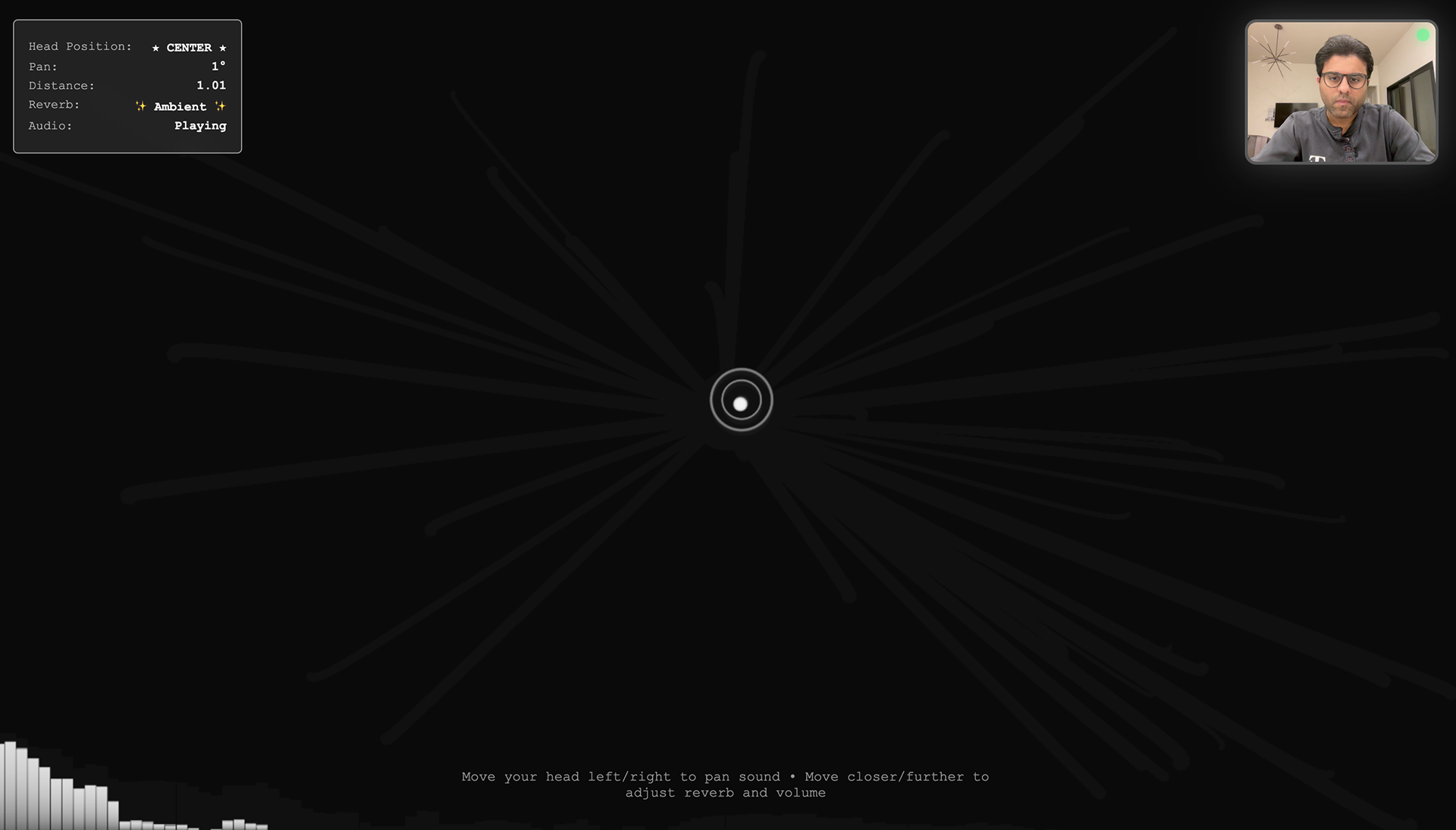
An immersive web-based audio installation that transforms head movement into spatial sound. Using real-time computer vision and Web Audio API's HRTF (Head-Related Transfer Function), the experience creates dynamic 3D audio positioning that responds to the listener's physical movements—mimicking technologies like Apple's Dolby Atmos Spatial Audio.
As users move their heads left or right, the audio pans naturally across the stereo field. Moving closer produces clear, direct sound, while moving away adds cathedral-like reverb, creating the sensation of music emanating from a fixed point in space. The interface features real-time audio-reactive particle visualization and frequency spectrum analysis, providing subtle visual feedback that complements the sonic experience.
The project explores the intersection of gestural interfaces, spatial computing, and perceptual audio design—demonstrating how natural body movements can create intuitive, embodied interactions with digital media. Designed as both a technical demonstration and an artistic installation, it invites audiences to physically explore sound space through movement.
Tech Stack
MediaPipe Face Detection • Web Audio API (HRTF Spatial Audio) • HTML5 Canvas • Vanilla JavaScript • Logic Pro X
KEY FEATURES
True 3D Spatial Audio (HRTF binaural processing)
Dual reverb system with cathedral-sized depth
Real-time audio-reactive visualization
Fully responsive (desktop, tablet, mobile)
AUDIO PRODUCTION
Original composition produced in Logic Pro X with professional mixing (EQ, compression, stereo imaging)
Commercial Track — Chahe Jaan Le
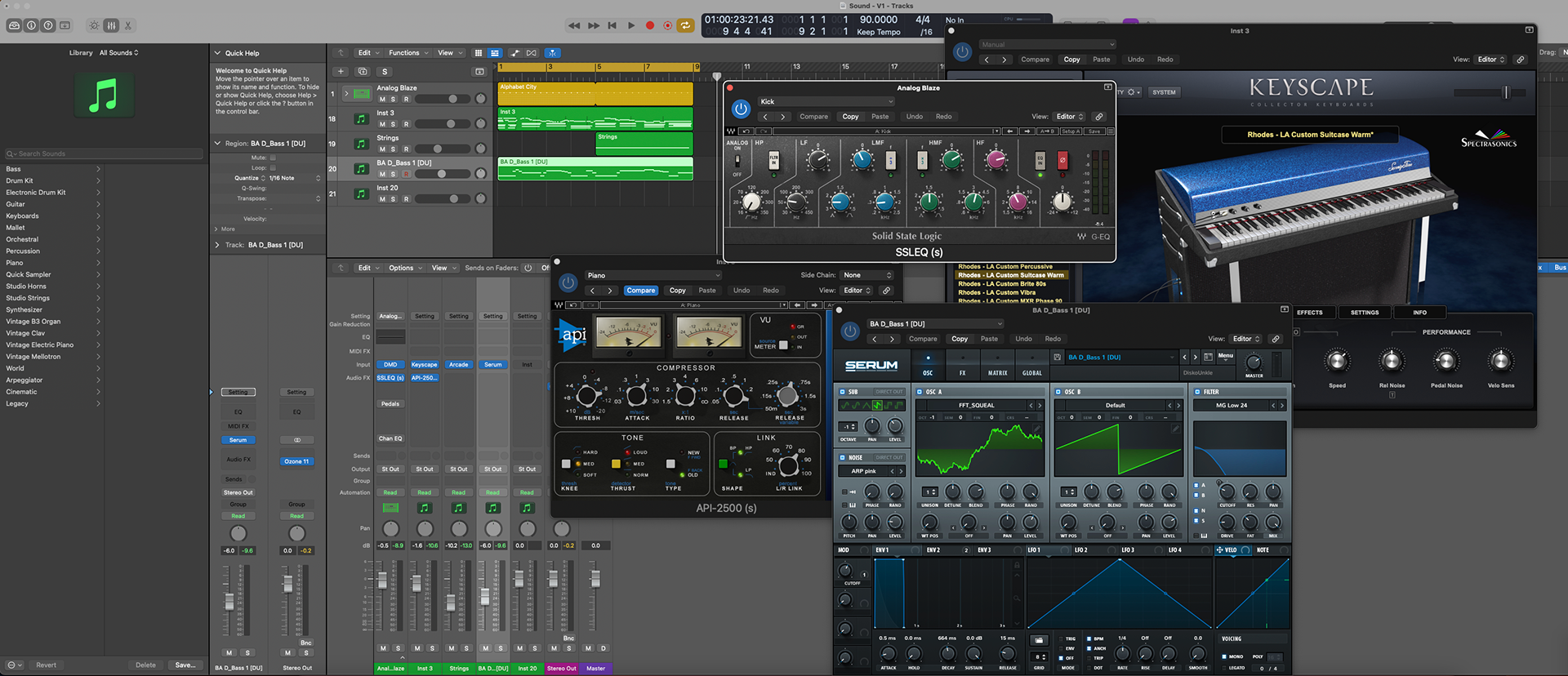
This project documents the production and mixing process of Chahe Jaan Le, viewed through the lens of sound as a performative, computational medium. The session reflects an approach where composition, timbre design, and spatial treatment are treated as expressive systems rather than fixed outcomes.
Working inside Logic Pro X, the track was shaped using a layered plugin workflow—EQ, compression, saturation, modulation, and spatial effects—to sculpt emotion, depth, and movement within the sound. Automation, dynamic processing, and time-based effects were used to continuously reshape vocal and instrumental elements, allowing the mix to respond fluidly rather than remain static.
The session emphasizes sound as something that can be performed, transformed, and felt—where tools act as extensions of gesture and intention, and production becomes an interactive act of storytelling. This view aligns with a broader interest in how technology can augment human expression, blurring the boundaries between composition, performance, and system design.
Role: Composer, Music Producer, Mixing Engineer
Vocalist: Benny Dayal
DAW: Logic Pro X
Vocalist: Benny Dayal
DAW: Logic Pro X
Hear the Audio.
Production Session File
Materializing Sound
An experimental live performance exploring chopped samples, real-time effects, and filtering as a performative process. How can live sample manipulation reframe sound as a dynamic, material system rather than a linear composition? The work investigates improvisation, transformation, and media responsiveness through real-time interaction. By treating the sampler as both instrument and interface, the performance foregrounds human–machine collaboration and embodied decision-making. Sound becomes a temporal space for exploration, where gesture, memory, and technology co-author the unfolding composition.
Hardware
• Roland SP-404 MKII – sampler, live effects processor, and performance instrument
Expressive Sound Systems
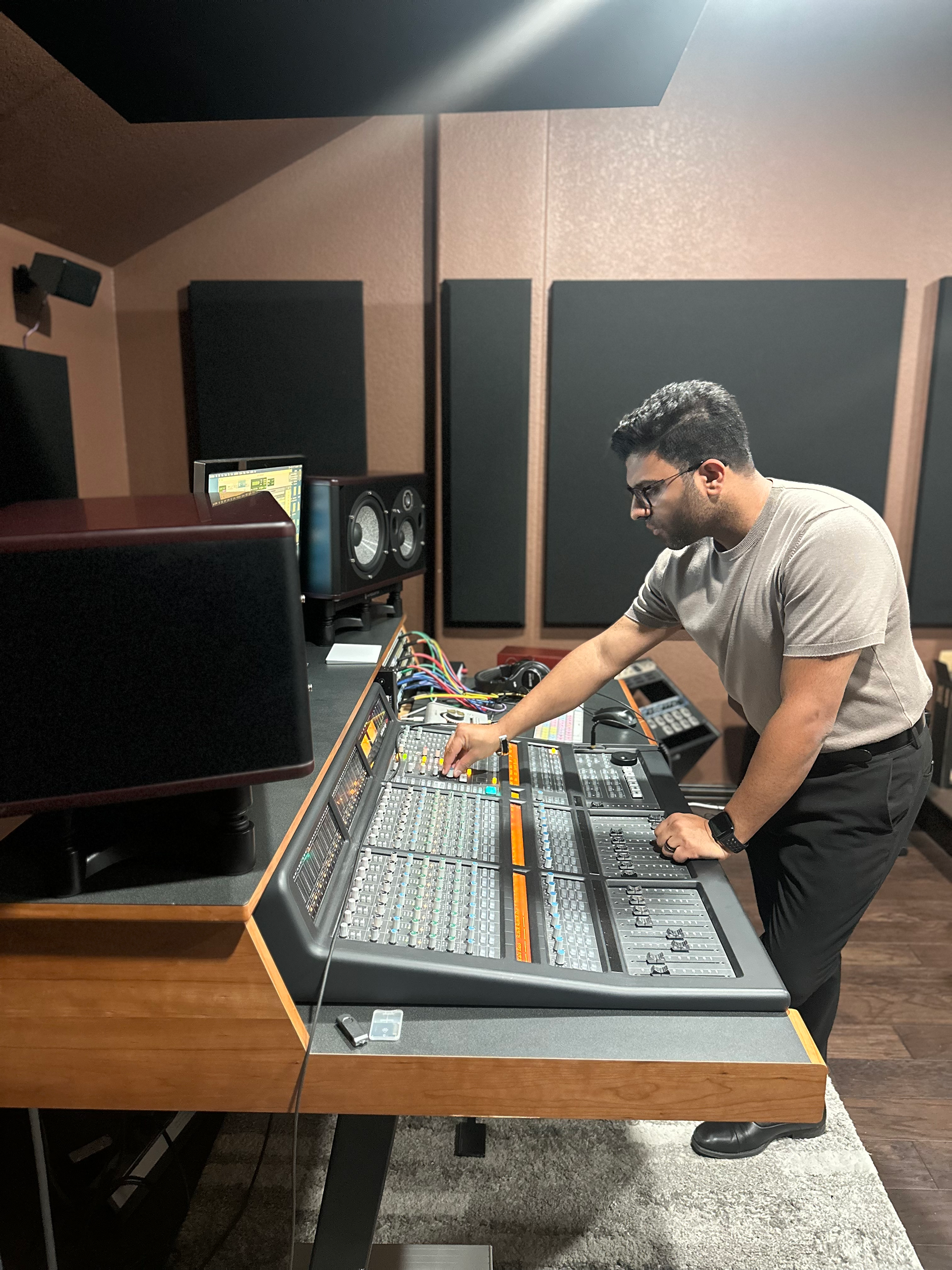
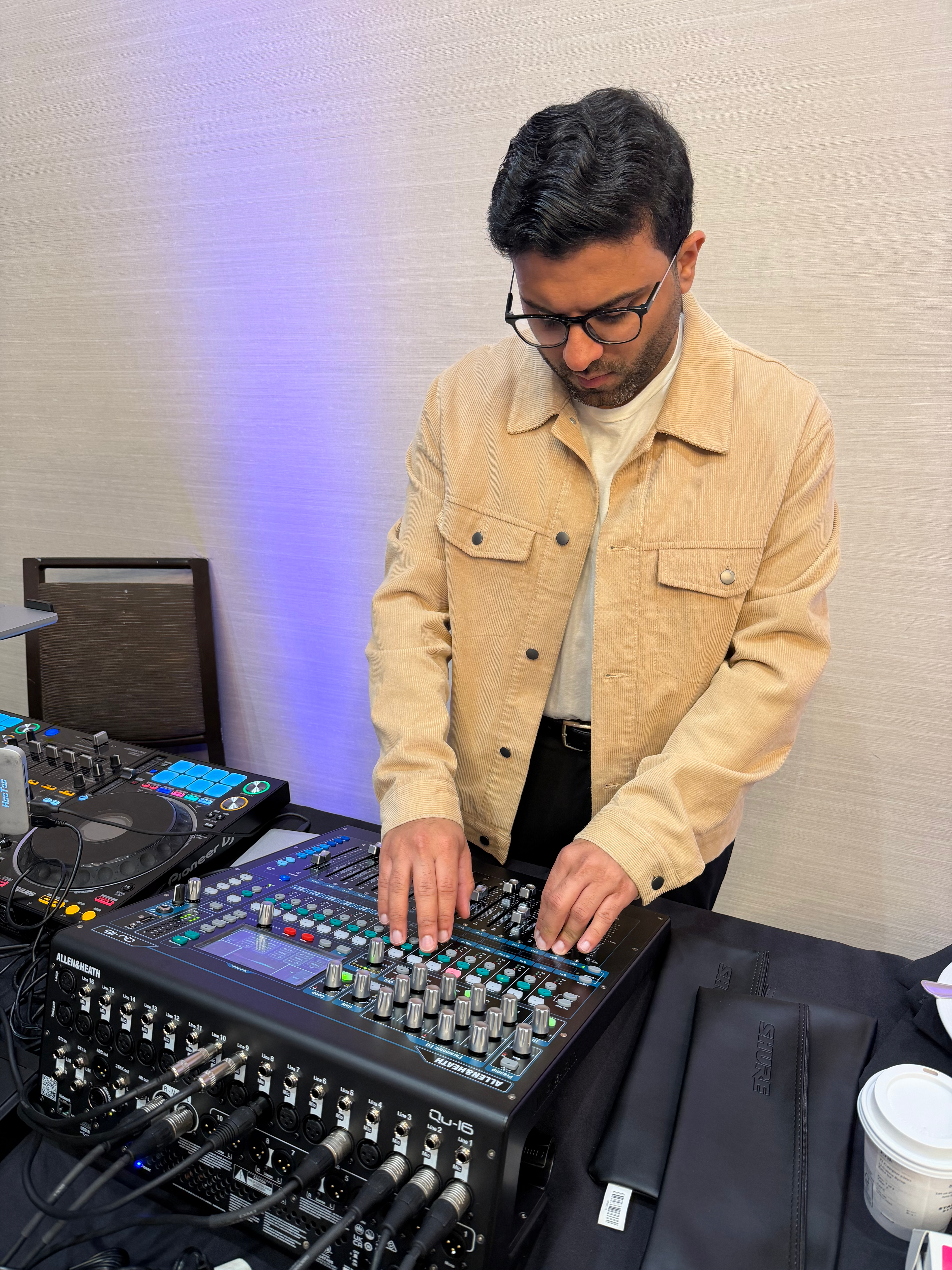
My sound practice moves between studio systems, spatial audio, and experimental interfaces. I treat mixing consoles, signal routing, and spatial placement as expressive instruments—spaces where gesture, structure, and perception intersect.
Commercial Music
A curated selection of commercially released music projects presented as professional outcomes alongside ongoing research into sound, interaction, and computational media. These works reflect applied production practice developed in parallel with experimental sound systems and interaction-driven inquiry.
Role: Producer · Composer · Vocalist · Mixing Engineer